Movies & TV & Theater on TheJitney is Miami’s cultural corner booth, the one where the cortadito hits hard and the takes hit harder. This page is for people who live their lives between art openings, Heat games, and late-night arguments about whether the new A24 movie was genius or basura. Everything here moves with Miami speed. Reviews are not academic snoozers. They’re fast, emotional, sunburned dispatches from someone who has seen too much, feels too much, and still shows up for another round.
Miami movies and theater.
Film coverage jumps from Wynwood-indie-weirdo vibes to blockbuster spectacle at Dolphin Mall. TV gets the same locally-sourced treatment. Prestige dramas, trash TV, guilty pleasures you’d never admit at Panther Coffee but binge anyway at 2 a.m.
Miami movies and theater.
Theater, though — that’s where the page breathes. Broadway, Off-Broadway, tiny Miami rooms where the AC barely works. If a show risks something, if it tries, if it even thinks about having corazón, it finds a home here.
This isn’t some neutral critic voice. It’s Miami talking. Sweaty, loud, honest, a little chaotic, and deeply in love with storytelling — the kind that rearranges your soul, at least for the night.
Netflix’s Extraction is a de facto Marvel reunion, though a particularly gritty and violent one. It’s produced by Anthony and Joe Russo, co-directors of such Marvel fare as Captain America: The Winter Soldier all the way to last year’s box-office behemoth Avengers: Endgame. Written by Joe, the movie also stars Thor himself, Chris Hemsworth and is the directorial debut of Sam Hargrave, stunt coordinator and assistant director of those Russo movies among many others (Atomic Blonde, Deadpool 2 etc.). Is Extraction worthy of these Avengers (re)assembled? Though somewhat generic as its title, this meat and potatoes genre picture entertains with its commitment to hard-hitting action. It is even slightly elevated by interesting details snuck into this oft-trod tale.
Hemsworth, sporting his native Australian accent, stars as Tyler Rake. He’s one of those mercenaries with a death wish who’s the Best at What He Does™ that we always see in movies of this ilk. The most interesting thing about him is his ridiculous name. It’s made more ludicrous when he violently dispatches two bad guys with… [deep breath] … his namesake garden tool.
When, Ovi, the young son of India’s biggest drug lord is kidnapped by the biggest drug lord of Bangladesh (I’m actually paraphrasing the movie here), Tyler is called into action. He descends into Dhaka, depicted here as a yellow-filtered-to-death slum, and rakes the bad guys over the coals (I’m sorry. I had to). Of course, the duo’s escape from the Bangladeshian capital is complicated by the country’s police and elite task force all under control of the that local crime lord, Amir Asif (Priyanshu Painyuli), and a mysterious violent figure whose reveal actually surprised me and added a nice wrinkle to the proceedings. I don’t know if that’s because the movie’s good or my critical faculties are bad.
There’s only one reason for Extraction to exist, the action.
Thankfully, the film does well in that department. It’s John Wick meets The Raid. Lots of people get shot up-close à la Wick and hard-hitting fisticuffs filmed in a frantic but controlled style like the Raid films. Though it must be said, without that Indonesian franchise’s elegantly brutal martial artistry.
The movie’s centerpiece is a “oner,” a series of long takes stitched together to look like one continuous shot. Yeah, the oner is in danger of being overused, but I’m still a sucker for it (see my review for 1917). Even when the seams show, as they do here with obvious edits that are not-so-well hidden. But the 11-minute action sequence still has great moments as the camera glides behind a car racing down the dirt streets. It then seamlessly moves inside so we can see Hemsworth driving, or a continuous shot following the main characters as they jump from one rooftop to the next. Some of it is undercut by dodgy CGI, which admittedly plagues much of the movie, but for the most part, it works.
In movies with plots as generic as this, I look for small details.
Little bits that help distinguish the film from the generic cesspool from which it sprang. Extraction has enough such bits to raise its enjoyment level. It may be something as simple as the movie properly showcasing silenced weapons as still being loud. Or little details like brawls in the middle of packed streets meaning that knife fights can be interrupted by oblivious scooter drivers. It’s also interesting that Rake wears elbow pads, making him seem just a little more human. Hemsworth, indeed, is slighter of frame here than in his Thor movies, which means he’s just an Adonis rather than a Greek god this time around. Though the pain and punishment he receives and brushes off is still commensurate to that of a superhero.
I know what you’re thinking. Elbow pads make the movie good? Well, no, but they’re indicative of a film not just coasting on autopilot. Hargrave and Russo seem aware of the limitations of the material and add some nice bits. They make sure that Ovi (Rudhraksh Jaiswal) is properly terrified but not an annoying brat. They give their one lone female character, the spectacularly cool Golshifteh Farahani as a fellow mercenary, unexpected action moments to shine. And they add some shading to the more villainous role of one character.
Maybe it’s just the quarantine talking and I’m just hard up for entertainment. But I enjoyed Extraction for what it was and for being just a little more than that. Give it a shot, it’s not like we have anything else to do right now.
In a heartbreaking newsletter sent out by GablesStage, it was announced that South Florida theater director Joseph Adler passed away the morning of April 16th, 2020 from a “protracted illness.”
Mr. Adler was 79.
It is impossible to list all of his accomplishments and how many lives he touched. For the last 20 years Mr. Adler served as Producing Artistic Director at GablesStage, winning eleven Carbonell Awards, including such plays as A Lesson Before Dying, Edward Albee’s The Goat, The Pillowman,Blasted and Ruined. He directed hundreds of television commercials and several independent feature films. He leaves behind a legacy unmatched in stature, within the South Florida theater world.
In addition, Mr. Joseph Adler was extremely active and vocal in promoting local arts causes. His latest the revival of the Coconut Grove Playhouse, pending to be the new home of GableStage, a building likely to bear his name.
Mr. Adler’s personality was extremely affable, light hearted, caring, accessible and non-threatening. His soft Brooklyn-accent soothing, comfortable and assuring. Hundreds if not thousands in film and theater could share wonderful heartfelt stories of their interactions with Joe. He truly touched so many.
In the GableStage newsletter, Steven Weinger, President and Board Chair, issued the following statement. “I am too sad to start a note about Joe’s accomplishments and contributions; this brief email is restricted to information about GableStage. That’s what Joe wanted us to focus on now.”
And in conclusion: “In the meantime, I offer heartfelt thoughts and prayers on behalf of all of us who admired and loved Joe Adler.”
Mr. Joseph Adler’s passing is indeed sad news at a sad time.
I started writing a review for the new movie The Hunt, a week ago with this introduction…
This is no time to go to the movies, as we are all seemingly starring in a film where nobody knows the ending. But if you are enough of a cinematic daredevil to risk the perils of coronavirus germs on your theater seat, The Hunt might be the movie for you.
One part violent exploitation B movie, another part societal satire, it’s a shame because we’re in the midst of an outbreak that no one is going to see this movie.
In the week since I saw The Hunt at a press screening with only three other attendees, society has changed. With movie theaters closing for the foreseeable future, late comers seemingly lost their chance to see this movie. But with The Hunt becoming available today to legally stream at home, I thought I should finish the review for a flick worth your time.
In all probability, even if COVID-19 didn’t enter our vocabulary, audiences would not have flocked to see The Hunt. It’s too violent. It’s too on the nose with its satire. It’s too unsparing in cynicism with how stupid we as a society can be. I wouldn’t put it exactly on the level of Fight Club or Idiocracy, but The Hunt shares enough of their brutally unsympathetic DNA that I could see its reputation following a similar arc. Forgotten and ignored in theaters and then over the years rising as a cult classic.
It’s better to go into this movie cold. So as far as a plot synopsis I’ll simply share The Hunt‘s vague IMDB blurb, “Twelve strangers wake up in a clearing. They don’t know where they are, or how they got there. They don’t know they’ve been chosen – for a very specific purpose – The Hunt.”
Written by Damon Lindelof and Nick Cuse, this is a worthy encore for their modern classic of a television series in Watchmen. The Hunt doesn’t have quite as many twists and revelations as that HBO series. But just like in Watchmen there are no dull moments in this lean script. Characters and plot only get enough screen time to service a point on how broken we as a people are and then it moves on to something else.
This is not a movie to watch with your multi-generational family. There is violence that will make some people suffer nightmares and others laughing fits. But during these strange, uncertain times The Hunt is almost a nostalgic portrait of a simpler era.
It’s that time of the year again. Spring is right around the corner. Miami is not so slowly warming up again. *Sigh*. But there’s good news. It’s also time for Miami Dade College’s annual Miami International Film Festival, now in its 37th year. Running from March 6 through March 15, the festival spotlights indie and international movies, with a focus on Ibero-American (yeah, I had to look it up also) films. Screenings will be held all over Miami, including the Olympia Theatre (what an amazing venue…what uncomfortable seats), Silverspot Cinemas (really comfortable seats), the Tower Theatre, and the Coral Gables Art Cinema.
What follows is a quick look at some highlights from the upcoming festival. There’s definitely more going on than listed here, certainly more than I could possibly do justice to in a short column. Well, that, and… I’m a little lazy. But for the full lineup check out the festival’s website.
The Burnt Orange Heresy
This year’s festival kicks off with the opening night film, The Burnt Orange Heresy, which closed out the prestigious Venice Film Festival last year. This neo-noir’s got a good cast, what with Mick Jagger (though more of a cameo, I hear), Donald Sutherland and Elizabeth Debicki starring. The movie’s based on a Charles Willeford novel of the same name (more on him in a bit), though its Miami setting has been moved to Italy by director Giuseppe Capotondi. Gotta go with what you know, I guess, but its Lake Cuomo setting is picturesque.
Danish actor Claes Bang stars as an art dealer roped into a scheme to steal a painting by a famously reclusive artist. What starts out as a light and airy romance with Debicki as an American traveling abroad turns more menacing as Bang’s art dealer allows his ambitions to overshadow his morals.
The movie was picked up by Sony Pictures Classics for distribution and opens in limited release (usually that means New York and L.A.) on the same night it debuts at the film festival. So if you want to catch it early in Miami, this is the only way. Debicki was amazing in 2018’s Widows, between her and a score from the fantastic Craig Armstrong, this one might be worth a look.
Miami Blues 30th Anniversary Screening
And speaking of Charles Willeford, one of the Florida resident’s most famous novels was Miami Blues, which was turned into a memorable Alec Baldwin and Jennifer Jason Leigh starrer back in 1990. Tarantino-eque before that was even a thing, Blues was kind of ignored upon release. Cool that MIFF is giving it some overdue attention with a special 35mm screening.
Chateau Vato
I’ll be honest. I’m including this one because it was written and directed by Tom Musca, who teaches film at the University of Miami, my alma mater where I studied all things movies. This one’s a comedy, a seemingly all too rare commodity at film festivals, and it stars Paul Rodriguez (remember him? If you’re of a certain age, as I am, the comedian’s name might ring a bell). Rodriguez plays a gardener who tends to the estates of Miami’s richest. When one of these elites dies unexpectedly, Rodriguez’s character moves his family into the deceased man’s mansion. Comedy of errors ensue.
This one’s low budget for sure. But, you know, it looks alright. Some of the cinematography is high end and the locations, especially the mansion, are nice. The title makes me want to vomit, but you’re not going to forget it. Could be fun.
Charm City Kings
A movie about dirt-bike riders in Baltimore who “rule the summertime streets” according to the festival’s website. Barry Jenkins, the director of Moonlight and the underrated If Beale Street Could Talk, is involved with this one. But look closely and his involvement is listed as “from a story partially conceived by…” That’s like calling a napkin a “Picasso” because he may have sneezed into it once. But Jenkins’ name got my attention.
Knight Heroes (2020 Edition)
Nope, not a movie (though it is a cool title!). Rather, it’s a program that features interviews with emerging talent from South Florida. What’s exciting is the talent on display this year. Three directors will be involved: Stella Meghie, whose romantic ThePhotograph opened wide this past Valentine’s day; Ari Aster, the horror auteur fast making a name for himself with films like Hereditary and last year’s Midsommar; and Lulu Wang, the Miami raised filmmaker whose second film was The Farewell, a comedy-drama that blew me away (it’s streaming for free if you’ve got Amazon Prime. Definitely check it out). All three talents will be discussing their influences, styles, and sharing their general filmic insights. It’s a rare chance to see a group of skilled artists discussing their craft in a live setting.
Mucho Mucho Amor
The festival’s closing night film is a documentary about Puerto Rican astrologer, Walter Mercado. I don’t speak Spanish, yet I remember coming across his predictions on Univision and watching them as a kid, transfixed. Didn’t know what he was saying, but was entertained by his over-the-top outfits and demeanor. The recently departed Mercado was and still is a fixture in Miami’s culture. A newly discovered shrine in my neck of town definitely bears that out. What better way to close out the fest than with a 305 icon like Mercado?
When discussing famous movie franchises, James Bond is usually the first one that springs to mind. With his suave demeanor and killer good looks, 007 has been a staple in American pop culture since the 1960’s.
As time went on and the culture started changing, so did James Bond. The character evolved, the settings changed, and actors came and went. However, what remains a constant is the franchise’s infatuation with the city of Miami.
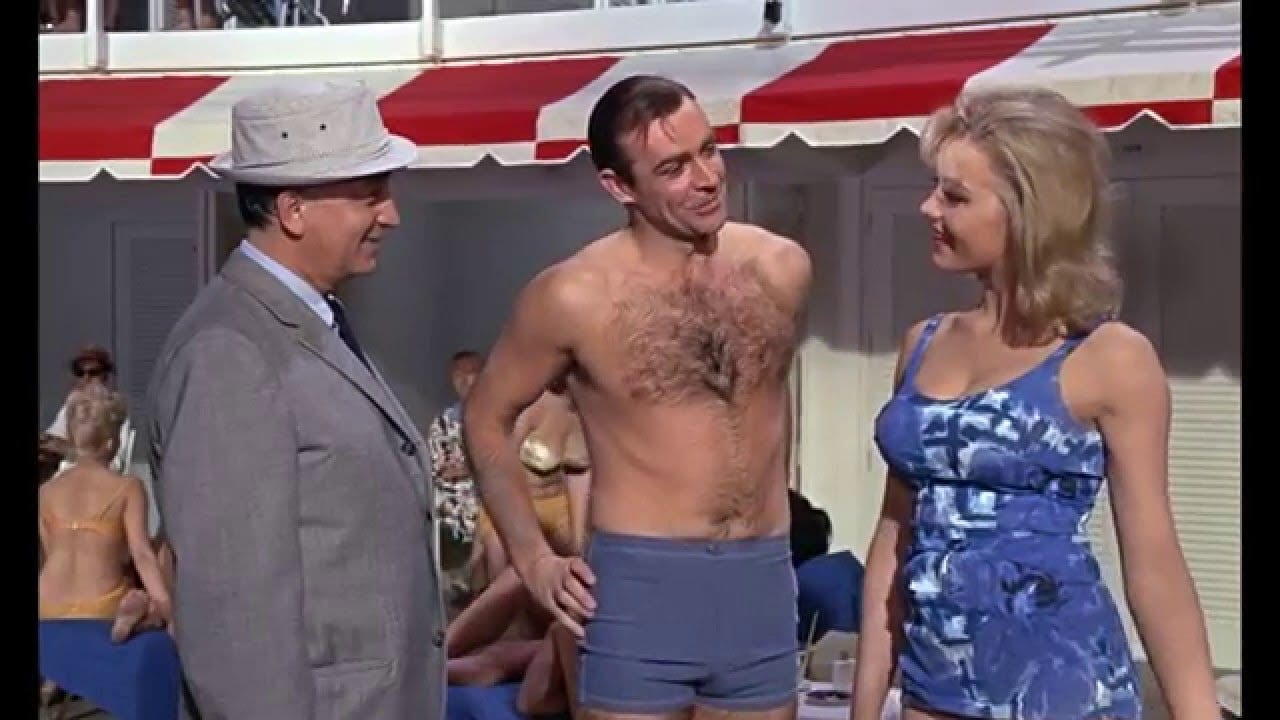
Starting in 1964, the James Bond series has long been intertwined with the Magic City. It was in Goldfinger where we first see Bond in all his glory. The intro takes us through the Fontainebleau where we get some amazing vintage shots of South Beach. “Intro Miami” serenades the audience, giving us a sense of how grand the location is.
In 1965’s Thunderball it’s found out that the films antagonist has a plan to blow up Miami in the end. Luckily that doesn’t happen, but we still get a taste of Miami’s flavor. The cool part about this movie is the incredible underwater battle that we get during the movie.
Taking place in Biscayne Bay, we see Bond, Navy Seals and SPECTRE guys fight in a scene that’s fit for a fever dream. There are spear guns, fiddling with breathing equipment and of course in the end Bond comes out unscathed.
There are other James Bond flicks that do mention Miami, but they weren’t filmed here. In Casino Royale, Daniel Craig ends up traveling from the Bahamas to the Czech Republic and he visits a museum named “Body Worlds Miami.” Unfortunately, that’s the last of Miami that we see from James Bond.
Although there aren’t any mentions of Miami in any other Bond film, there was one of the largest James Bond collections in the world in North Miami. The Dezer collection in North Miami (which is moving to Orlando), had everything from old cars from several items of movie memorabilia that is enjoyable for any movie buff.
All in all, Bond in Miami has provided some great moments in pop culture. We can only hope in the next edition of Bond, South Florida has a cameo.
I grew up in Hialeah. I could begin and end a biography with that statement. I always felt at home but different. The city’s relentless survival mode and brutal affection made me resilient, without question. But I’m not entirely sure how it contributed to my penchant for dreaming. If you let it, the town could beat you bloody. But if it didn’t, you flourished. That’s probably where the dreaming comes in. And the passion, creativity and, of course, gumption. But that Well of Wonder always baffles me. How did I find it, and why is it still brimming?
See, I was always in love. But my days in Milam Elementary School (on West 16th Avenue and 60th Street) from 1975 to 1980, were magical. Under my older brother’s shadow and wing, I was always butting in, shooting high, reaching for the unattainable, and often falling on my durable face. Those years and crushes play like a novel or film—a warm, sunny fantasy with endless summers and Grease and Christmas shows with 6th grade choral divas and Diane, my favorite cheerleader of all time, and this could go on for pages. As I got older, however, there was nothing in art that gave me the feeling of those unbelievable memories. Nothing in books or film (no matter how many great ones I read or saw) came close to capturing, viscerally, emotionally, spiritually, what it felt like to live through that time, in that world. But that all changed when I was twenty-five. And then again six years later.
In 1993, Jeffrey Eugenides graced the tiresome world of modern fiction with his first novel, The Virgin Suicides, a slim volume with more weight than one might imagine—almost more than I could bear. It is a beautiful book, and it brought out things in me that wanted light and exposure. It inspired me in ways that still resonate. I went on a creative binge after that. Songs, stories, dreams, intrepid but fruitless ventures and escapades—all of these erupted from this one little book. If you haven’t read it—do. The book is about the Lisbon sisters, five girls whose demise devastates a suburb and a group of boys. These boys, now men, wrestle with the mystery of these girls and the lack of answers and meaning to which they are consigned.
A few readers, confused and hostile critics and detractors, felt the girls were not seen as people, that the novel used them as lurid context or sad, sexual caricatures, nothing more. These readers missed the boat—the plane, train and automobile. It portrayed the girls with unencumbered truth and gravitas. I submit that this book, although very much entrenched in the lives of these girls and their difficult existence, is more about the collective narrator, a group of men who were then boys, their lives lovingly scarred and mystified by these unknowable sisters and their enduring spirits. Most stories about a thing are usually embedded in the context of a larger and more powerful thing–and often an even more terrible, tragic or sinister thing—but that larger thing is not this thing, and you cannot tell all stories or comment on all things in one effort. You with me? I digress.
In 1999, Sofia Coppola chose The Virgin Suicides as the basis for her debut film.
And here we are, twenty years later. The movie affected me almost as much as the book. The Criterion Collection finally released their sumptuous edition this past year (I’m still waiting for them to get off their keisters about Lost in Translation). I received the new Criterion edition as a gift upon its release, and I watched it with full eyes and misty wonder. It’s tragic magic and fresh force still there after all these years. What an ambitious first effort. What a bold choice, both for its lyrical mastery and cinematic potential. Not easy to pull off. But Coppola, daughter of master filmmaker and all-around cinematic gambler Francis Ford Coppola, brought it to life with eloquent, confident direction, elegant writing and loving devotion.
The Virgin Suicides is a baby blue, sun dappled gothic dream. The story spans one year in the lives of these five sheltered sisters, their inevitable suicides, and the boys who obsessed over them. The collective narrator, voiced by Giovanni Ribisi, in a tortured flashback, is still sifting through the evidence and rummaging through dusty rooms and empty years, desperately searching for answers to the girls’ suicide “free-for-all”. He steers us through an amber landscape of vivid memory still damp with desire, despair and regret. The atmosphere of suicide is palpable throughout the movie, but the mystery of the Lisbon girls’ interior lives, the sadness of their physical and emotional confinement, and the distant longing of their worshippers are at the forefront of the film’s power and poignancy.
Those awkward encounters in the school halls. A strange and painful basement party thrown for Cecilia after her unsuccessful first attempt. Mrs. Lisbon, making Lux burn her rock albums after a missed curfew. Drinking peach schnapps and making out in fruit-sweet passion under the riser at a homecoming dance—a dance unlike any other you’ve seen in a high school movie with ELO echoing throughout the fairytale-like gym. A soul-swelling song dialogue between the boys and the girls, from their separate homes and bedrooms, carried out in an intimate language and tender, compassionate exchange only possible through a record player and phone receivers. The girls’ rosy dreams and fantastic escapades: these are the moments and elements that endure after the Lisbon girls go away for all time.
Rarely does a film do justice to a near-perfect novel, but this one delivers brilliantly.
Coppola’s screenplay and direction, seamless, organic and perspicacious, allow the audience to experience the mixture of beauty, humor and horror without pulling a muscle. Techniques like the montage and voiceover are used to propel and enhance the story without a trace of staleness. Like all great directors, her choice of music demonstrates her ability to immerse herself in another world filled with characters and events she clearly understands. Coppola chose the French duo Air to compose the score. The music, eerie and tender, weaves the framed images with uncanny congruity and feel. The simple melody of “High School Lover” the film’s “love theme” in particular, will creep its way inside your chest and haunt you for days (or, as in my case, for years).
The soundtrack is just as good. Although some of the songs used in the film are mentioned in the novel, the majority were cleverly chosen by Coppola. Listening to classic Todd Rundgren and the unsung Sloan in the same scene is enough to confirm badass stature. In several emotionally charged scenes, the audience actually hears the pops and crackle of needle dropping on vinyl before the song begins. Common enough in films these days, but not so in 1999. Whether in celebration or grief, experiences that move us inevitably lead to the comfort, solace or inspiration of music. Everyone can relate to pressing the play button or dropping the phonograph arm to assuage the pain or exalt the joy. It’s a nice touch by Coppola, real and all-too familiar.
The cast is an effective blend of veterans, popular newcomers and talented first-timers. Leading the cast are James Woods and Kathleen Turner as Mr. and Mrs. Lisbon. Woods’ portrayal of the goofy, whipped and slightly “out there” father is sad and pathetically endearing, but Turner’s turn as the domineering and over-protective mother fills the screen and chills the spine. Kirsten Dunst’s performance as Lux Lisbon, is heartbreaking and delectable. She languorously parades her girl/woman aura with naughty swagger and innocent charm, the perfect blend for a character too sad to be good but too pure to be bad. Josh Hartnett plays Trip Fontaine, the only real love in Lux’s short life. Fontane is the quintessential heartthrob. Hartnett flaunts the character’s newfound confidence, magnetism and cruelty with brutal and genuine command. Rounding out the cast are a couple of surprise cameos and a slew of new faces.
If you’ve never seen The Virgin Suicides, you really should.
If you have, it’s time for another look. In either case, it is worth the extra effort and dough to experience it via Criterion’s expert and painstakingly affectionate treatment. This new edition boasts a new 4K digital restoration, supervised and approved by director, with 5.1 surround DTS-HD Master Audio soundtrack on the Blu-ray. It includes new interviews with Coppola and actors Dunst and Hartnett. There’s also a great interview with author Jeffrey Eugenides, The Making of The Virgin Suicides, a 1998 documentary directed by mother Eleanor Coppola, and Lick the Star, a short film by Sofia Coppola. There are further goodies, including music videos, trailers and an essay by novelist Megan Abbot.
This film is an independent treasure, tragic and enchanting, unlike any other movie exploring the inexplicable world of adolescence. It is a film about high school without the trappings or clichés. It is a film about love without excess sentimentality. It is a film about death laced with angelic immortality. It is a film about innocence vitiated by constricting mores and misplaced, good intentions. Like the memory of a past, unrequited crush, The Virgin Suicides will leave a melancholic and hypnotic impression on your psyche and senses.
No way did anyone who sat through awful comic book movies like The Mask or Batman Forever, ever think we would get where we are in 2020. Sure they could envision comic movies being box office smashes, from 1978’s Superman on there was a long history of that. But no one saw comic book movies one day being critically acclaimed to the point the last two years had comic book adaptations nominated for the Best Picture Oscar. And not one, but two men, have won a Best Actor Academy Award for playing the Joker.
And so as I watched Sonic the Hedgehog, I had to wonder how far are we from video game adaptations ruling Hollywood? It’s a silly question to consider based oh this slapstick, sloppy hodgepodge of a movie, but no less silly than proposing to a viewer of The Mask in 1994 that comic books would be the world’s movie genre of choice in the coming decades. If Jim Carrey knew in the past that comic book movies were what’s up, perhaps he’s tapped on to where the public consciousness is going by starring in Sonic the Hedgehog.
Video games have been around for over 40 years. They now tap into a large part of the population’s childhood nostalgia just as comic books did before them. That kind of goodwill goes a long way toward filling seats and putting a smile on audience’s faces. The crowd at the screening of Sonic the Hedgehog I sat in laughed heartily at the sophomoric jokes ( I did too), but the biggest cheers came at the end when a surprise cameo from Sonic’s video game universe showed up. It’s apparent video game adaptations, like comic book adaptations before them don’t need that much creativity to hit the audience’s sweet spots. Just be competent, throw in a couple obscure references only die-hard fans of the property will catch, and watch profits grow.
If Sonic becomes a success we will probably start to see more video game adaptations. I’m fine with that. Kids of all ages need escapism. My concern is that video game movies take the same monolithic route as comic book movies. In 2030 will Quentin Tarantino write an op-ed that video game movies aren’t cinema, and will Joaquin Phoenix win his second Oscar for playing a grim and gritty Pac-Man whose hunger will never be sated?
Well for one thing Miami, don’t say there’s nothing to do. From now until the weather gets bad there’s a ton of activities to keep you busy before the mosquitoes return. For your convenience here’s our Miami festival guide for spring 2020.
GroundUP Music Festival, February 14-16, at North Beach Bandshell. For the fourth straight year the music label puts together a low-key three day festival on the beach headlined each night by a jam with the band Snarky Puppy. Other acts this year include Michael McDonald, Lila Downs, and Lettuce. Tickets go for $85 a day or a weekend pass for $225.
Coconut Grove Arts Festival, February 15-17, at Coconut Grove. Since 1963 this street fair has grown into one of the largest outdoor arts festivals in the United States. They expect over 120,000 people to make it this year on the winding streets of Coconut Grove to check out art, music, and street food. Tickets cost $12 for a one day pass.
Miami International Film Festival, March 6-15, at various locations. Since 1983, Miami International Film Festival has brought a diverse program heavy on foreign and independent cinema you won’t have any other chance to see in a theater. This year’s line-up includes a documentary on Walter Mercado and The Burnt Orange Heresy starring Mick Jagger.
Miami-Dade County Fair & Exposition, March 12-April 5, at Tamiami Park.Relive your youth at the event formerly known as the Dade County Youth Fair. See if your stomach can still withstand deep fried foods and fast spinning rides.
Calle Ocho, March 15, at Calle Ocho, SW 12th to 27th Avenue. Nothing is as Miami as this annual street fair. The music has yet to be announced but there will certainly be a croquetta eating contest.
Ultra Music Festival, March 20-22, at Bayfront Park. After last year’s disaster at Virginia Key, the world’s most famous electronic music festival is coming home to Downtown Miami. Headliners this year include Major Lazer, Afrojack, and David Guetta. Three day tickets cost $399.95 as we write this, but will go up.
Miami Open, March 23-April 5, at Hard Rock Stadium. For those looking to chase the sporting high from the Super Bowl, you can return to the scene of the big game for the Miami Open. All the big names from Serena to Federer to Nadal traditionally play the tournament. We’ll see if this year more crowds show up at this less than ideal venue for a tennis tournament.
III Points, May 1-2, at Mana Wynwood. Miami’s premier music festival moved back in teh calendar for 2020 and also condensed into a 2 day event. This year III Points as we predicted features The Strokes and Stereolab, but also bring to Miami Disclosure, Wu-Tang Clan, Robyn, Ariel Pink and a ton of local acts. Two day tickets cost $149 as we write this, but will go up.
The 2020 Miami Jewish Film Festival wrapped up last night. After screening 100 films over two weeks a few of the movies were singled out for celebration. Here’s the list of awards…
Grand Jury Prize: Saul & Ruby, To Life!
Next Wave Prize: Flawless
Critics Prize: The Painted Bird
Short Film Competition Prize: Minor Accident of War
Audience Award for Best Narrative Film: My Name Is Sara
Audience Award for Best Documentary Film: The House on Wannsee Street
As a member of the critic’s jury that selected The Painted Bird as best movie, I watched seven of the festival’s flicks. Below are my unsolicited thoughts on those movies.
The Painted Bird
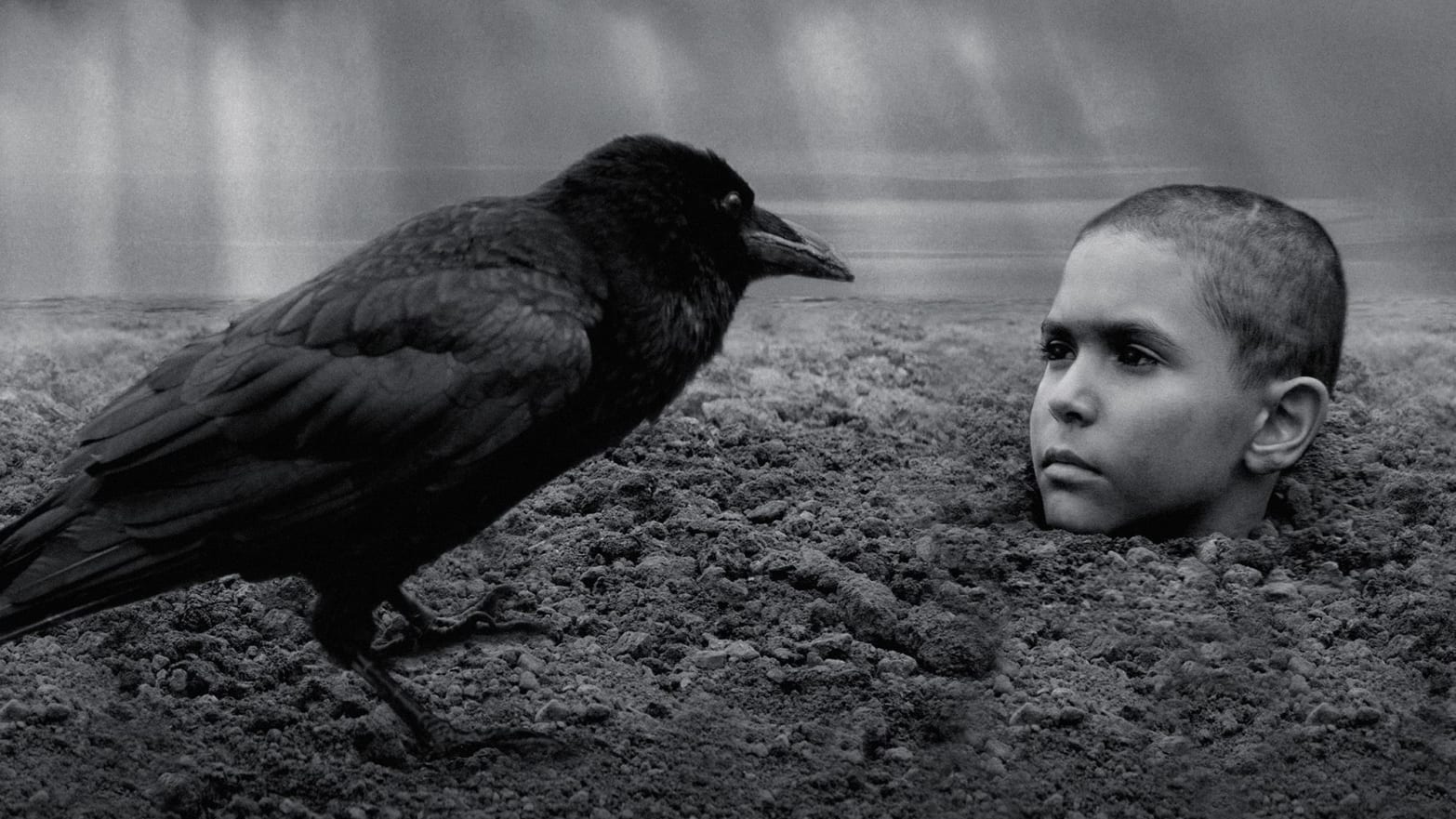
Shot in black & white with graphic sex and violence, subtitled in foreign languages, and with a running time of nearly three hours, The Painted Bird is not accessible to everyone. But if you nodded your head when Martin Scorsese chastised Marvel movies for not being cinema, see this on the big screen when you have a chance. This is a special movie. Beautifully photographed it follows the misadventures of a young boy dealing with the horrors of World War 2. The protagonist finds himself in absurdly awful situations that will make you squirm. One part Bergman, another part Faces of Death, The Painted Bird is chock full of images that will sear into your consciousness permanently and make you ask, how can I stand by when others are being persecuted?
Those Who Remained
There was some good acting and impressive production design in this Hungarian movie, but the storytelling was deeply flawed. The movie doesn’t judge the strange central relationship between a teenage girl Holocaust survivor and her gynecologist. At an hour and twenty minutes (though it felt longer), they didn’t have enough time to justify this Lolita-esque scenario. What time they did have was spent with episodic scenes that never climaxed into anything significant or thought provoking.
Africa
This was a low key charmer about a 70 year old Israeli facing his mortality. Kind of like an About Schmidt in Hebrew. Nothing incredibly big happens, instead there were a lot of small, humorous scenes that add up to poignancy. One scene in particular stands out when the protagonist is interviewed by his grandson for a school project and it dawns on him that he has a whole lot more past behind him, than future in front of him.
Curtiz
I’m as much a fan of black & white movies as anyone (see my above glowing thoughts on The Painted Bird), but no amount of shades of gray will save a clumsy script. This is a fictional recounting of the Hungarian director Michael Curtiz filming the classic 1942 movie Casablanca. The problems start with the characters all being cliches from the mugging comic relief screenwriters to the mean as a junkyard dog wife. If you have a hankering for Humphrey Bogart or to spend some time in a non-colorized world, save yourself the boredom and rewatch Casablanca instead.
Incitement
If Joker was half the movie of Incitement, the DC comic book adaptation would be worthy of all its awards. There are some eerie parallels between the two films, both follow undersexed, frustrated young man who live with their parents and gain notoriety by assassinating a famous person. Incitement does it without pretension or Batman Easter eggs as it recounts the months before Yigal Amir assassinated Israeli Prime Minister Yitzhak Rabin. Shot similarly to Paul Greengrass reenactment movies like 22 July or Bloody Sunday, it depicts an Israel of 1995 that had very similar political rhetoric as 2020 America.
God of the Piano
This Israeli movie had an interesting inciting incident where after a mother learns her child is deaf, she decides to take home a different baby from the hospital. But that’s as interesting as it gets as God of the Piano devolves into half baked melodrama. Nothing rings true with this movie as the underdeveloped characters meander through a(thankfully brief) eighty minute running time without any interesting consequences for their actions.
Saul & Ruby, to Life!
This documentary features Saul Dreier and Ruby Sosnowicz, two 90+ year old South Florida holocaust survivors who decided to form their own klezmer band. The movie follows the act over two and a half years as they eventually perform in their birthplace of Poland to perform songs of love and happiness on a continent they had to flee from the previous century. Both touching and schmaltzy, it’s hard to stay dry eyed watching this.
Jeffrey Lynn Goldblum was born October 22, 1952 in Pittsburgh, Pennsylvania, one of four children. He is of Russian / Austrian / Jewish descent. Goldblum began his career on stage in New York City at the age of 17 and earned his first film credit in Annie Hall with one memorable line of dialogue about forgetting his mantra.
Jeff Goldblum is cool, quirky. Tall, nerdy — a little cringy — he delivers lines spastically, with nuance and an annoying uptight charm. But he’s sexy. Like science sexy.
In the 80’s, he made crazy weird movies like The Fly and Earth Girls are Easy.
He married Geena Davis, super cool.
In the 90’s Hollywood gobbled up his persona and threw him into blockbusters like Jurassic Park and Independence Day. Then in the 2000’s he embraced his quirkiness becoming a regular player in Wes Anderson movies and popping up in cool cameos like The Pull-Out King in Portlandia.
Jeff Goldblum is no doubt cool, but also a little annoying, also very much like science.
In the end, if you are Team Goldblum, it’s a science.
Bill Murray
William James Murray was born September 21, 1950 in Wilmette, Illinois, a suburb north of Chicago. He was the fifth of nine children and is of Irish descent. Murray began his acting career in comedy at the infamous Second City theater group in Chicago. Along with Dan Aykroyd, John Belushi and Gilda Radner, also members of Second City, Murray joined Saturday Night Live in 1975.
Eventually Murray transcended into an icon with classic 80’s screwball comedies like Meatballs, Stripes, Caddyshack, Groundhog’s Day and Ghostbusters. Then, later in his career, like Goldblum, Bill Murray was absorbed into the Wes Anderson canon whom embraced his quirkiness like no other. There is no Wes Anderson without Bill Murray. Life Aquatic, Rushmore, The Royal Tenenbaums, Moonrise Kingdom, and on and on.
Thing with Bill Murray is he’s kind of a dick. His early characters are bombastic, nutty, sarcastic, cocky anti-heroes. His late characters are bitter, depressed, cynical and sardonic. Bill Murray can play an asshole that you love like nobody’s business.
Bill Murray is like sports, a spectacle, a show, with flair and pageantry, but at the same time just a silly game.
If you are Team Murray, for you — it’s a game or sport. And you got that going for you.
Jeff Goldblum or Bill Murray?
It’s a close call, but for us it’s Bill Murray.
We like sports over science even though we know what’s more important.