Category: Movies & TV & Theater

Movies & TV & Theater on The Jitney is Miami’s cultural corner booth, the one where the cortadito hits hard and the takes hit harder. This page is for people who live their lives between art openings, Heat games, and late-night arguments about whether the new A24 movie was genius or basura. Everything here moves with Miami speed. Reviews are not academic snoozers. They’re fast, emotional, sunburned dispatches from someone who has seen too much, feels too much, and still shows up for another round.

Miami movies and theater.

Film coverage jumps from Wynwood-indie-weirdo vibes to blockbuster spectacle at Dolphin Mall. TV gets the same locally-sourced treatment. Prestige dramas, trash TV, guilty pleasures you’d never admit at Panther Coffee but binge anyway at 2 a.m.

Miami movies and theater.

Theater, though — that’s where the page breathes. Broadway, Off-Broadway, tiny Miami rooms where the AC barely works. If a show risks something, if it tries, if it even thinks about having corazón, it finds a home here.

This isn’t some neutral critic voice. It’s Miami talking. Sweaty, loud, honest, a little chaotic, and deeply in love with storytelling — the kind that rearranges your soul, at least for the night.

  • Mountainfilm Miami Celebrates Florida’s Unique Environment This Weekend

    Mountainfilm Miami Celebrates Florida’s Unique Environment This Weekend

    Telluride Mountainfilm, one of America’s longest running documentary film festivals, will be showing films at The Kampong in Coconut Grove on January 10 and 11 as part of its world tour program. Mountainfilm is dedicated to educating, inspiring and motivating audiences about issues that matter, environments worth preserving, adventures worth pursuing and conversations worth sustaining.

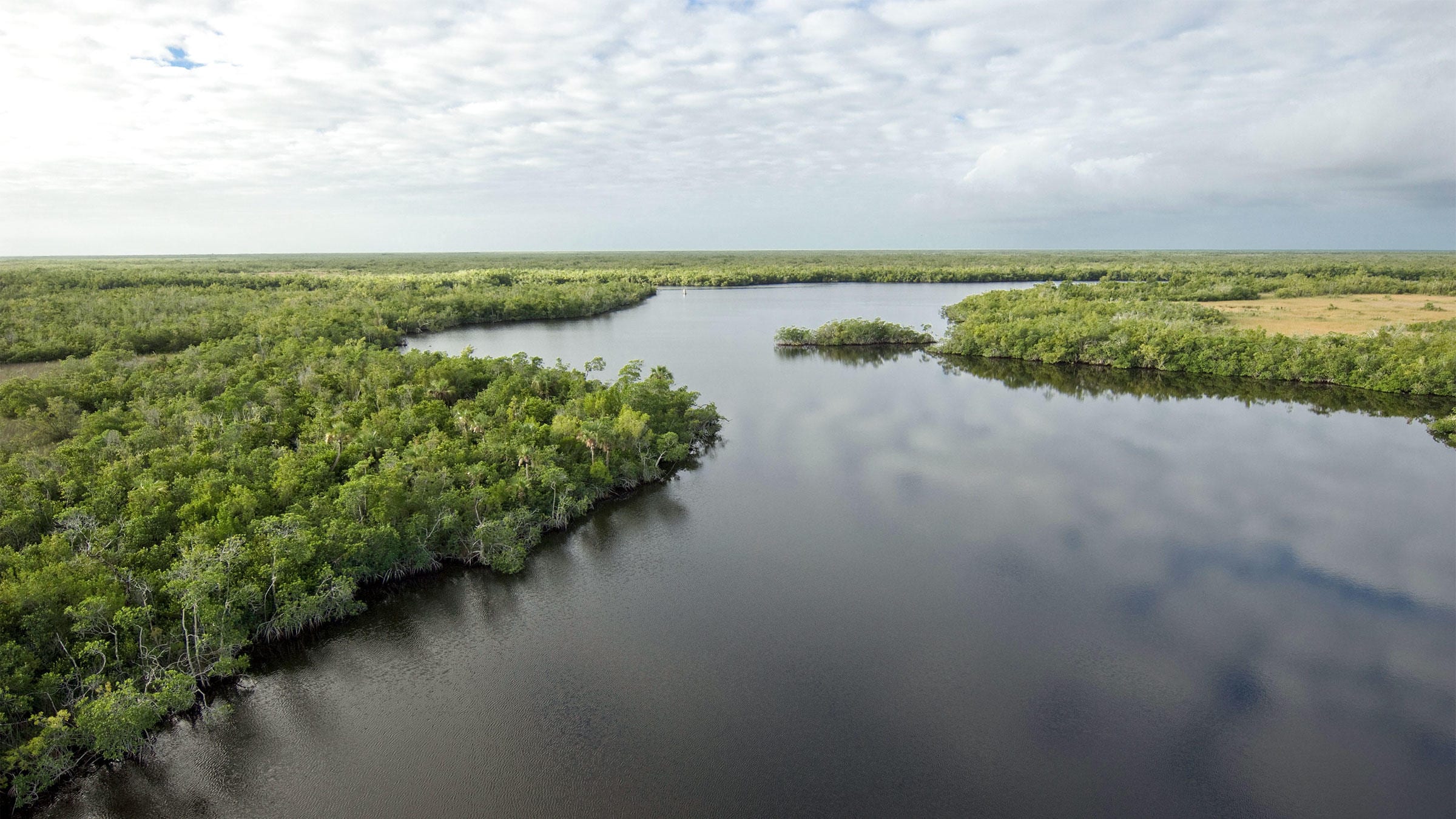
    This year the event will highlight the Florida Wildlife Corridor, a statewide network of lands and waters that supports wildlife and people. There will be a showing of the short film The Last Green Thread which brings attention to the need to preserve the narrow paths that allow wildlife to travel through Florida’s Everglades Headwaters. Amidst a backdrop of massive development and population growth, the film follows a group of three friends as they embark on a journey through the Everglades Headwaters to survey the fragile wilderness corridor before it disappears forever.

    A photography exhibit of the Everglades Headwaters by Adam Bass, will be also be on display at The Kampong during Mountainfilm on Tour. Former Executive Director of the Florida Wildlife Corridor, Mallory Lykes Dimmitt will be discussing the film on Saturday evening.

    This is the fifth year of Mountainfilm On Tour in Miami. Spearheading the effort to bring Mountainfilm to Miami has been the architecture firm [STRANG]. “The Kampong was selected as the venue for the event due to its cultural significance and shared educational mission”, says Max Strang, “I can not think of a more appropriate location to showcase these films. Get ready for two nights of engaging short films, great company, food and drinks at an extraordinary venue.”

    Tickets may be purchased online through www.mountainfilmmiami.org. The cost for each show is $25 for adults and $20 for students and includes open bar.

  • Florida Film Critics Circle Announce 2019 Awards

    Florida Film Critics Circle Announce 2019 Awards

    I’m proud to be a part of the Florida Film Critics Circle, and if anybody asks why, all I have to do is point to our 2019 awards. Our winners are a strong collection of picks that don’t fall directly in line with everybody else’s selections for the year. With that in mind, let’s take a closer look at the nominees, who won, and whom I championed in the voting process. The winners will be in bold and my responses beneath.

    BEST PICTURE

    1917
    Ad Astra
    Marriage Story
    Portrait of a Lady on Fire
    The Irishman

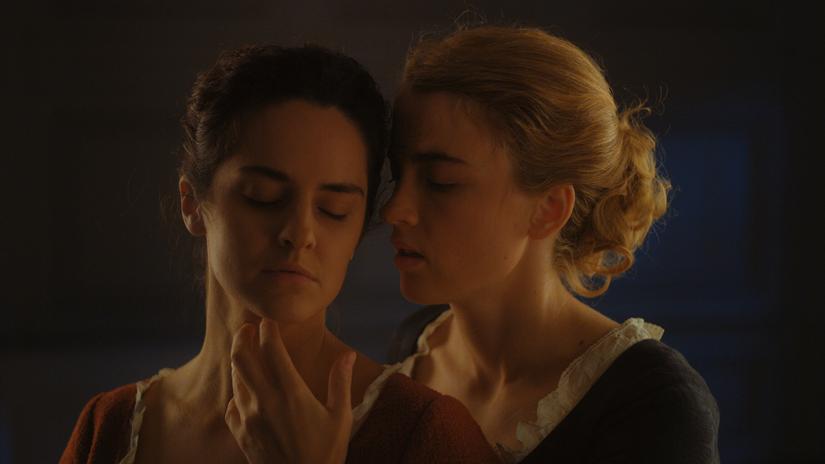
     Ad Astra was my choice for Best Picture. A muscular adventure with a strong philosophical bend, James Gray’s sci-fi picture blew me away. And as it’s seeing almost no awards love, I really wanted the FFCC to recognize it. But I’m happy it just got nominated, and Portrait of a Lady on Fire is an inspired choice. Beautifully acted and photographed, the movie practically simmers with romantic longing. It’s a fantastic movie that sticks with you long after you see it.

    BEST ACTOR

    Adam Driver, Marriage Story
    Adam Sandler, Uncut Gems
    Antonio Banderas, Pain and Glory
    Franz Rogowski, Transit
    Joaquin Phoenix, Joker
    Taron Egerton, Rocketman

    Look, I’m just glad Joaquin Phoenix didn’t win for Joker. I went with Adam Sandler for Uncut Gems, an in your face performance that never lets up. His Howard Ratner was basically an a-hole, but Sandler somehow found the human underneath. Adam Driver is a fantastic choice, though. He gave a warm, humane performance in Marriage Story, and I waffled between him and Sandler for a while. Ultimately, I went with Sandler for just how surprising his turn was.

    BEST ACTRESS

    Charlize Theron, Bombshell
    Elisabeth Moss, Her Smell
    Florence Pugh, Midsommar
    Renée Zellweger, Judy
    Scarlett Johansson, Marriage Story

     No complaints here. Johansson was my choice. She killed it in Marriage Story.

    BEST SUPPORTING ACTOR

    Anthony Hopkins, The Two Popes
    Brad Pitt, Once Upon a Time in Hollywood
    Joe Pesci, The Irishman
    John Lithgow, Bombshell
    Tom Hanks, A Beautiful Day in the Neighborhood

    Kinda predictable? I don’t know. Joe Pesci is a treasure and it’s hard to coax him back to acting these days, so I get it. I went with Brad Pitt. His swagger in that film is enjoyable from beginning to end, and it seems to be hiding a bit of pathetic side only hinted at. But honestly, I would have been cool with any of these dudes winning.

    BEST SUPPORTING ACTRESS

    Annette Bening, The Report
    Isla Fisher, The Beach Bum
    Jennifer Lopez, Hustlers
    Laura Dern, Marriage Story
    Margot Robbie, Bombshell
    Scarlett Johansson, Jojo Rabbit
    Zhao Shuzhen, The Farewell

     This is an unbelievably strong category this year. I loved Johansson’s energetic, compassionate performance in Jojo Rabbit, and Zhao Shuzen was quietly commanding in The Farewell, but I’m  totally on board with Laura Dern. She’s a force of nature in Marriage Story and, frankly, Dern is long overdue in getting credit for her amazing career.

    BEST ENSEMBLE

     Little Women
     Marriage Story
     Parasite
     The Farewell
     The Irishman

     Little Women was good, but I got annoyed with the constant PDA. I get it, they’re close, but do they constantly have to be in each others’ personal space, hugging and pawing each other to prove it? I went with The Farewell, which showed the same familial love in a more subdued but just as striking manner.

    BEST DIRECTOR

    Céline Sciamma, Portrait of a Lady on Fire
    Greta Gerwig, Little Women
    Sam Mendes, 1917

    Céline Sciamma destroyed a lot of us with her Portrait, and she was my choice for Best Director. Glad the other FFCCers agreed.

    BEST ORIGINAL SCREENPLAY

    Bong Joon-Ho and Han Jin-Won, Parasite
    Céline Sciamma, Portrait of a Lady on Fire
    Lulu Wang, The Farewell
    Noah Baumbach, Marriage Story
    Quentin Tarantino, Once Upon a Time in Hollywood
    Ronald Bronstein, Benny Safdie and Josh Safdie, Uncut Gems

     Uncut Gems is an anxiety attack for nearly two and a quarters hours. Its energy and constant forward motion is a thing of beauty. I just wish the ending had zigged instead of zagged and maybe left us with a little more to ponder. I went with the beautifully funny The Farewell, instead.

    BEST ADAPTED SCREENPLAY

    Anthony McCarten, The Two Popes
    Greta Gerwig, Little Women
    Micah Fitzerman-Blue and Noah Harpster, A Beautiful Day in the Neighborhood
    Steven Zaillian, The Irishman
    Taika Waititi, Jojo Rabbit
    Terrence Malick, A Hidden Life

     Greta Gerwig’s non-linear interpretation of Little Women breathed new life into her adaptation of the beloved book. My choice here aligned with the rest of the FFCC.

    BEST CINEMATOGRAPHY

    Claire Mathon, Portrait of a Lady on Fire
    Hoyte Van Hoytema, Ad Astra
    Jörg Widmer, A Hidden Life
    Roger Deakins, 1917

     Can’t go wrong with any of the worthy choices here. I voted along party lines, going with my baby Ad Astra, a stunningly beautiful film. But, Deakins is undoubtedly the man and his work on the one-take trickery of the spectacular 1917 is the right choice.

    BEST VISUAL EFFECTS

     Ad Astra
     Avengers: Endgame
     Alita: Battle Angel

     The only category I vehemently disagree with. Alita’s effects are complicated but soulless. Ad Astra, my choice, may not have been as revolutionary, but served the story beautifully, transporting you through our solar system with poetic beauty.

    BEST ART DIRECTION/PRODUCTION

     Barbara Ling, Once Upon a Time in Hollywood
     Kevin Constant, Christa Munro, Alison Sadler, David Scott and Gary Warsaw, Ad Astra
    Dennis Gassner and Lee Sandales, 1917

     Speaking of transporting, Barbara Ling’s work on Once Upon a Time in Hollywood perfectly took us back to a Hollywood that just doesn’t exist anymore. Me and my FFCC brethren align once again.

    BEST SCORE

    Daniel Lopatin, Uncut Gems
    Hildur Guðnadóttir, Joker
    Max Richter, Ad Astra
    Randy Newman, Marriage Story
    Thomas Newman, 1917

     I love me some electronic music, so I’m happy Lopatin (who normally records under the name of Oneohtrix Point Never) got the nod here. I’m pretty sure by now you know who I went with. Max Richter’s work for Ad Astra was stirring, as mysterious and energetic as the movie itself. I wanted that soundtrack from the moment the movie started.

    BEST DOCUMENTARY

    American Factory
     Apollo 11
     Honeyland
     The Biggest Little Farm

     Award fatigue is setting in. Maybe FFCC has too many categories? Apollo 11 is a great choice, but maybe a little safe? Not that my choice for American Factory was revolutionary or anything.

    BEST FOREIGN LANGUAGE FILM

     Long Day’s Journey Into Night
     Pain and Glory         
     Parasite       
     Portrait of a Lady on Fire      
     The Farewell  

    Portrait was my pick for foreign film. It was between that one, Parasite, and The Farewell. If I had known it would win Best Picture also, I would have voted for one of the other two, strong contenders that definitely deserved some awards love.  

    BEST ANIMATED FILM

     Frozen 2
     How to Train Your Dragon: The Hidden World
     I Lost My Body
     Toy Story 4
     Weathering With You

     Thinking outside of the box is good. I went traditional, going for Toy Story 4. What can I say? To make something this good four movies in deserves some recognition.

    BEST FIRST FILM

    Booksmart
     Honeyland
     Queen & Slim
     The Last Black Man in San Francisco

     This is the category where I think the FFCC is pushing it. Enough awards already. Who cares about a Best First Film? I went with Honeyland, but I thought I went with Booksmart. Honestly, fatigue was setting in at this point.

    BREAKOUT AWARD

    Florence Pugh, Midsommar, Fighting With My Family and Little Women
    Honor Swinton Byrne, The Souvenir
    Lulu Wang, The Farewell
    Roman Griffin Davis, Jojo Rabbit

    Ditto with the Best First Film award, but I went with Lulu Wang. The Farewell is not her first film, but it’s an attention getter that nonetheless announces a promising new talent. Same goes for winner Florence Pugh. Even among the many talented people milling about in Little Women, she stands out. I’m thinking we’ll be seeing a lot more from this talented thespian in the future.
  • Miami Jewish Film Festival Announces 2020 Slate

    Miami Jewish Film Festival Announces 2020 Slate

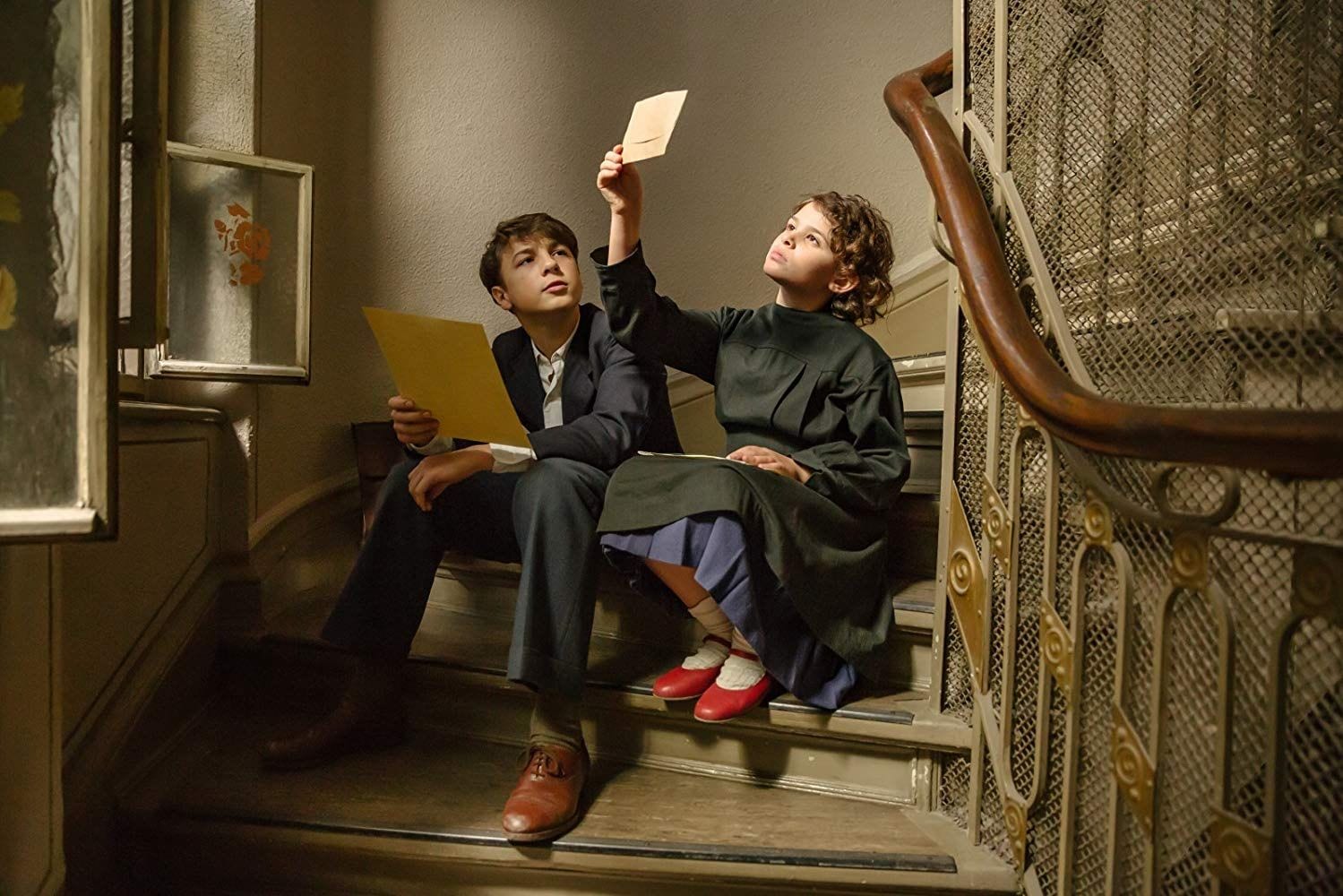
    The 23rd Annual Miami Jewish Film Festival announced their 2020 line-up. The festival will be held January 9-23 and will feature over 100 movies from 25 different countries which allows it to bill itself as “the largest Jewish film program in the world”.  This year will have six world premieres including two films made in Miami, five Oscar entries, remastered classics from Jewish filmmakers like The Shining and Casablanca, and flicks starring old favorites like Billy Crystal, Harvey Keitel, and Angelica Huston. To get a feel for what audiences can expect from Miami Jewish Film Festival we spoke to its director Igor Shteyrenberg.

    How are the films for the festival picked?

    Igor Shteyrenberg: We go through an extensive selection process which includes online submissions, attending international festivals, networking with the film industry, as well as receiving referrals from producers and filmmakers.  Generally, the Festival programming team will screen more than 2,000 films each year. It is always a tense and difficult process, as every film has an important message to share and a unique experience to offer. We value each film and review every film submission. This year we will be premiering an unprecedented 107 films from 25 countries and featuring more than 50 international guests.

    What makes a movie eligible? Does Judaism have to be the subject matter or does a movie just being made by Jewish filmmakers allow it to qualify?

    Broadly speaking, the film has to have some inherent Jewish value. We try to stretch the concept as much as possible, as we believe there are times that a film that’s not overtly Jewish can just as well offer itself in a powerful education capacity. We look at such instances on a case by case basis, but will always favor Jewish and Israeli films in our programming process.

    What are some highlights for 2020?

    Every film selected this year presents a fascinating story worthy of discovery. With that said, we are always excited to celebrate local films and this year have two poignant stories receiving their world premieres at MJFF. These include our opening night film, Saul & Ruby, To Life!, as well as the documentary Names, Not Numbers. In each of their respective ways, both films present inspiring revelations about our community. We can’t wait for our audience to experience these stories and for the rest of the world to discover them.

    We are also thrilled to host two centennial celebrations of classic silent films, The Cabinet of Dr. Caligari (Coral Gables Art Cinema) and The Golem (Braman Miller Center in the University of Miami Campus). Both film events will feature the premiere of their new restorations and will be accompanied by newly commissioned live scores performed by local artists.

    We are just as excited to present for the first time in the Festival’s history a Spotlight on Ibero-American Cinema featuring films from Argentina, Brazil, and Spain. These are films that will be receiving their international and North American premieres, so our South Florida audience will be the very first to see these incredible films outside of their home countries.

    What have your favorite moments been at previous editions of Miami Jewish Film Festival?

    What we most look forward to every year, at each new Festival edition, is the opportunity of finally meeting all the filmmakers, producers, and stars who we have been talking, planning, and working with all year. Who we have gotten to know and become such good friends with. It’s an incredible feeling to be able to bring to life a vision and hope we shared together and see it come to life as we dreamed it and celebrated by a community of film lovers.
    But what we are even more proud of is when we can facilitate these films and filmmakers’ discovery by a US distributor. Over the last seven years, the Festival has become an important market for the discovery of Jewish and Israeli cinema. In this short time span, we have experienced a tremendous increase in films being acquired directly from the Festival for US release, these include films such as The Last Resort (USA, 2018), Leona (Mexico, 2019), 1945 (Hungary, 2017), In Search of Israeli Cuisine (USA, 2016), and The Last Mentsch (Germany, 2015), among many others.
  • New South Florida Movie Waves Is an Afterschool Special on the Big Screen

    New South Florida Movie Waves Is an Afterschool Special on the Big Screen

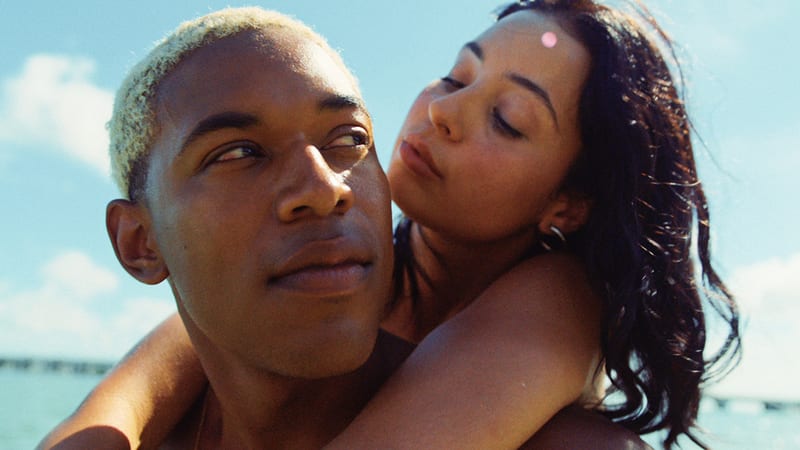
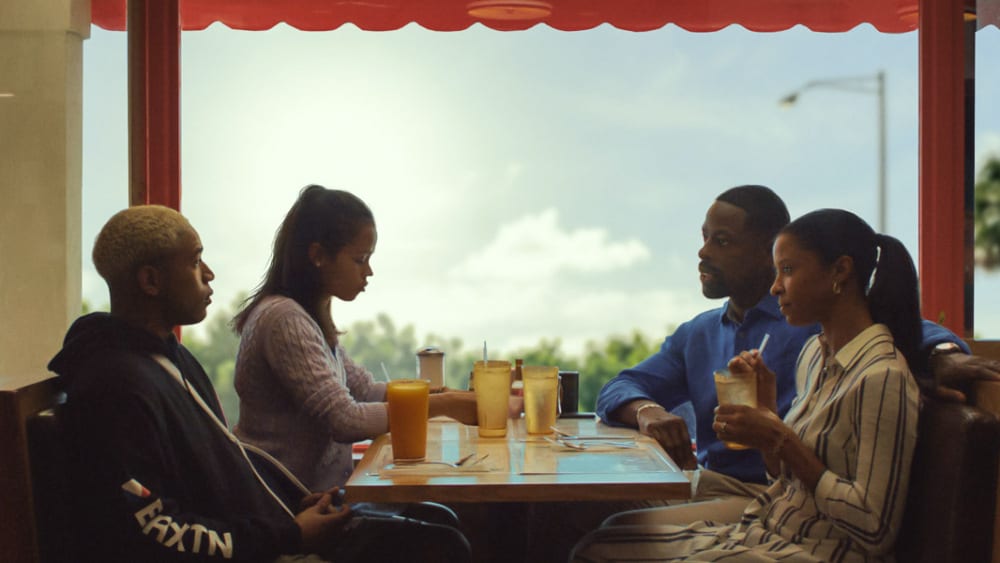
    Waves strives for depth, but like its young protagonists, it’s only teenage deep. All moping and feeling sorry for itself. With an indie sensibility, South Florida setting, focus on an African-American family, and repeated ocean imagery (complete with brewing storms in the background), Waves hearkens back to Moonlight, the Miami-based film that became a critical darling and multi-award sensation. But those are just surface comparisons. This is about an affluent family, living in a beautiful house, with one of its protagonists a popular, outgoing jock. More importantly, Moonlight was stylish with a poetic soul, Waves just has style.     

    Waves has flair, but at its core it’s a very stylish after school special. It becomes more than that, thankfully, but that first hour or so, oh boy, it’s like something a hungover English teacher would force on a bored high school class in order to take the day off.

    The camerawork is energetic, constantly on the move, constantly roaming through each scene. Aspect ratios change, while dramatic colors enhance shots and kaleidoscopic sequences break up scenes (a colorist, Damien van der Cruyssen, is even acknowledged in the open credits). All of this gives the movie a visual vitality, especially in its hypnotic and lengthy montages.

    That vitality, sadly, is lacking in the story department. Despite all of that style, the story feels perfunctory. It’s confidently told, at least, and much of it is relatable, but nothing in that first hour convinced me to care. All of those fancy camera angles, yet nobody bothered finding a new angle from which to tell this type of story.

    Waves first hour is packed with enough incident that it’s like watching a full two hour movie in half the time.

    It’s exhausting. Filled with ominous dread, much of it delivered by an anxiety-inducing wall-of-soundtrack (score by Trent Reznor and Atticus Ross), that first half is clearly building to…something. We don’t know what, but we know it’s coming, and we wait and wait for it to come. Tyler is a talented high school wrestler. His father drives him hard (“We don’t have the luxury to be average,” he says), but a career ending shoulder injury leads Tyler to substance abuse, which leads to escalating fights with his unexpectedly pregnant girlfriend who doesn’t want to get the abortion Tyler is passive-aggressively demanding. It builds and builds, but keeps postponing what it wants to get to, so interest just wanes and wanes. It takes so long to get to its point, eventually the movie just feels like Wheel of Misfortune, misery compounds with each turn as you wait for somebody to finally end up on “Bankrupt” and get it over and done with.

    Once it finally is over and done with, the movie is anything but, leading to a whole second hour that switches to a completely different point of view. Emily, Tyler’s younger teenage sister, is the focus here as she deals with the fallout of the film’s first half and does so while navigating her first real relationship with Luke, who was on Tyler’s wrestling team. This half is better, more poignant. The switch to a female point-of-view is unexpected and welcome, especially since the first hour and fifteen minutes is so alpha-male-centric. And the way the second hour juxtaposes with the first gives the movie some much needed emotional heft. But the second half is still just as ponderous as what preceded it. It’s a lot to sit through. Too much risk, not enough reward.

    Writer/director Trey Edward Shults puts the various Miami/South Florida locations to good use. As a backdrop, Shults sticks to our suburban areas, lakes, and canals not usually represented on the big screen, giving a sense of the real South Florida rather than the touristy one (well, mostly. The Rickenbacker Bridge appears within the first five minutes, a familiar site in movies because of its views of Miami’s skyline).

    Clearly, Shults has talent, and, clearly, he put thought into the movie. It all comes together nicely enough in the end, offering hope without treacle. But there’s not enough insight into the characters, into human behavior to justify all of the preceding excess. In the end, Waves is more exhausting than enlightening.

  • Trey Edward Shults on His New South Florida Movie Waves

    Trey Edward Shults on His New South Florida Movie Waves

    Even though Trey Edward Shults’ new movie Waves uses its South Florida locations to maximum effect, the coming-of-age ensemble drama felt like it could have taken place in any city, USA. So my first question to Shults when I had him on the phone was why set it in our neck of the woods? “My girlfriend is from here.” Shults said. “This is the first place I lived after leaving Texas. We were so broke we lived in her grandmother’s apartment in Davie. I wanted to set it in her hometown and I wanted to do it justice.”

    From its opening shot driving on the Rickenbacker Causeway towards Key Biscayne to a random manatee sighting to a high school in Davie, Waves does capture a very 305/954 kind of feel. In chronicling the traumas of a suburban African-American family, it avoids most of our tourist locales. There are no scenes on Ocean Drive, nor any painted walls in Wynwood (though Shults did say he transformed the Wynwood bar, Gramps, to portray a diner). Rather it showcases a different South Florida than movie audiences are used to. Instead of nightclubs we get suburban teenage house parties. In lieu of art deco we get the construction sites of our endless housing boom.

    But Shults said before he had a setting, he had a theme for Waves, “I wanted to make something that spoke to the highs and lows of life. The love, the hate, the fun, the agony. I wanted to explore that between a brother and a sister and their lovers.”

    Waves is a heavy movie.

    The first half of it in particular. There’s one specific scene that is as agonizing to sit through as any drama this side of Requiem for a Dream.  As tough for the audience as that brutal moment was (which we won’t describe), Shults said it was even rougher for himself and the cast and crew. “The pinnacle event was hard. I didn’t want to stop shooting until it felt honest. We had to show how a relationship built on love can fall. If we didn’t get that scene right, the whole movie would fail.”

    The hour of cinema that comes after that difficult scene stops Waves from becoming too much of a downer. “The first half is a cautionary tale,” Shults admits.  “The second part is about working on communication. I hope people will connect with these complex human beings.”

    So far audiences and critics have connected with the movie with mostly positive reviews. The two hour fifteen minute feature they saw was very different from Shults’ original cut. “I edited it for a year. I wanted an abundance of material and I got it. The first cut was three and a half hours. We brought in an editor (Isaac Hagy) to help me get my sanity back. if you believe there could have been a scene between moments in the movie, there probably was. But you have to kill your babies.”

    With his babies killed, and a movie completed that channeled difficult moments from his own life, Shults is happy to not have any other cinematic fires in the oven. “I feel like a blank slate. I put everything I had into this movie.”

  • A Load of Borscht (Film Festival)

    A Load of Borscht (Film Festival)

    What’s worse than driving in Miami? Driving in Miami to an event a l o n e. No meeting up with friends. Just you. I think I had an anxiety attack on the 836 and then a panic attack on the 395. One from the drivers and the other from the idea of being alone in an unfamiliar scene. I exaggerate, of course. The event was the 2019 Borscht Film Festival but the main event at the Arsht Center, so technically it was still pretty artsy but I mean I don’t know the film scene like I do the visual arts scene. You guys might be surprised to hear but just because it seems like art doesn’t make it the same thing. That’s like saying Wells Fargo bank tellers are the same as Best Buy sales people. Both try to sell you something but one is trying to sell you a credit card and the other a 3-year warranty on an external hard drive. Totally different concepts but equally unnecessary.

    I get to the Arsht and go through security. Then the lady spots my camera in my bag, she looks at me, shakes her head and gestures to come with her. But I’m over here like “whoa where is she going with my child??” She hands my camera to some guy that oozes manager vibes and tells me how cameras are not allowed. So at this point my anxiety went from “this should be fine” to “this does not feel fine at all” as I walk away from my camera being held hostage.

    I get to my seat feeling too aware of my discomfort. I have absolutely no idea what to expect from a film festival let alone a Borscht event. The lights dim and there is this flickering light situation coming from somewhere. I look up and see 100 different Borscht logos being projected on a circular screen on the ceiling. It was a cool effect but it was weird enough to make me feel like I was being initiated into the Illuminati. Plus there was this 4D puppet show that followed. It resembled something of the Lion King or that part in the Alien ride where the lights turn off and you aren’t sure if one of the actors will breathe on your neck. A bunch of people from Borscht talk and then the films start playing. It goes without saying that most of the films carried an aura of artistic expression, but the overarching theme that night was violence, drugs and hyper reality with hints of sex and Santeria.

    When I’m in a room watching a movie with other people I start to become hyper-aware of the people around me. I absorb their reactions and wonder why I didn’t laugh when they laughed or clenched the edge of my seat when they gasped. I think a lot of people missed the bigger picture that Borscht expressed with this film festival. Besides the idea of being “reborn” which they constantly mention throughout their promotion, there was a much bigger concept that I think might have even gone over the founder’s heads.

    Nobody reads. Nobody listens. They just watch.

    If we watch a movie about animated cars dealing gas as a metaphor for laced cocaine then just maybe we listen about the drug crisis in Miami, which in turn helps us read Miami a little clearer. Films are invaluable, even more so for shedding light on the crevices of Miami that make it super 305. Borscht helps artists make these films happen and then makes events that allows the public to experience and realize what these artists and filmmakers learn. So that’s all, Miami. Just keep watching, listening and reading.

  • The Irishman Is a Great Gangster Flick that Even Finds Time to Visit Miami

    The Irishman Is a Great Gangster Flick that Even Finds Time to Visit Miami

    The Irishman probably isn’t the greatest gangster movie of all time. It probably isn’t Martin Scorsese’s best film. Robert De Niro and Joe Pesci and Al Pacino have maybe done better work. The turnout and reception will probably never quite be what the team’s collective clout would warrant. And it’s likely that, just as it’s gone for most of Scorsese’s career, the Academy will ignore it.

    It’s a complicated movie, eluding summation, but it’s a masterpiece. It’s brutally violent and punishingly sad and sincere and gorgeous and it’s one of the most powerful movies of the year.

    The Irishman has been fermenting for about a decade. Since Robert De Niro first read the book on which it’s based in 2006—and it’s been shaped along the way by a team of venerated, decorated, fifty-year Hollywood veterans (Scorsese, Pacino, and De Niro in particular) who’ve brought to the project something greater than the sum of their talents. The Irishman, though enriched by the photography, outstanding performance,s propulsive pacing and remarkable CGI, is defined, more than anything, by a gloss of mortality, of reflection, remorse.

    DeNiro, in what’s undoubtedly one of the greatest performances of his career,  plays Frank Sheerhan, a World War Two veteran turned truck driver turned mafia executioner. After a chance encounter with mafia higher-up Russel Buffalino (a menacingly senescent Joe Pesci), Sheerhan’s introduced to organized crime. As the execution work flows in, his and Buffalino’s families become close.

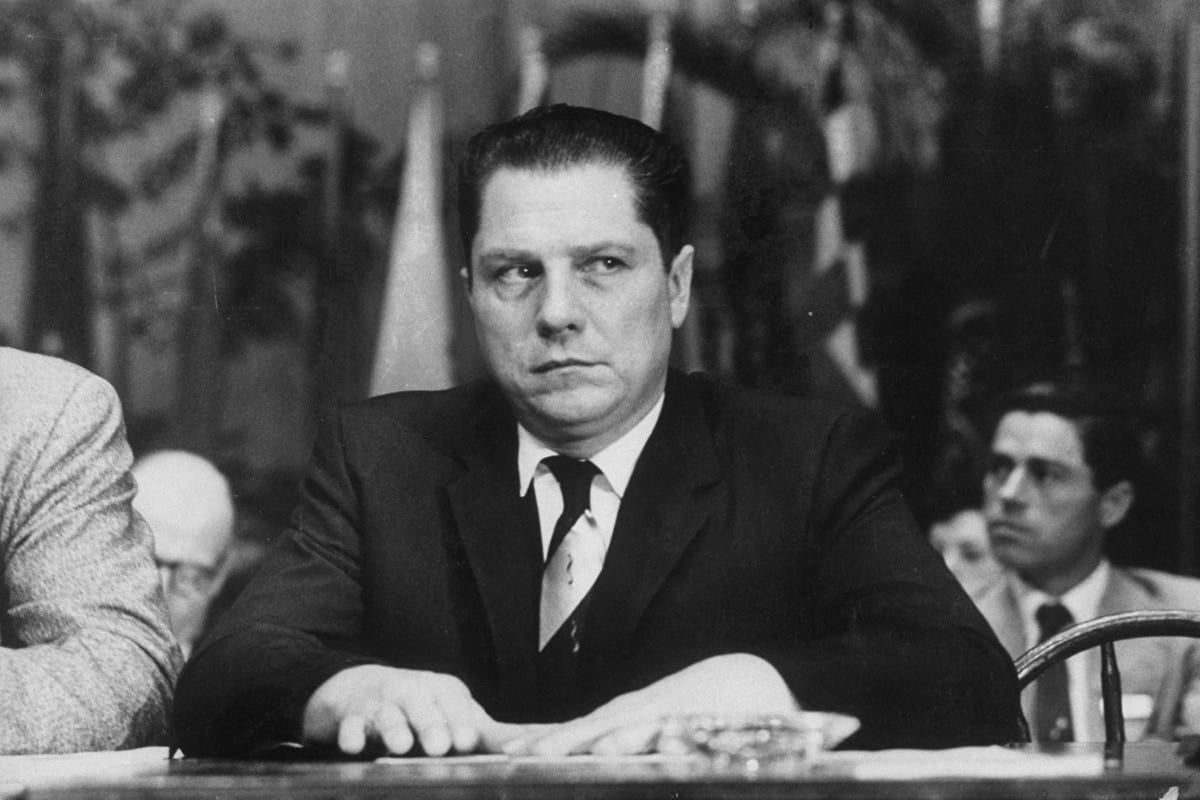
    As a result of this, and by extension of Buffalino’s connections, the formidable 6’4” Sheerhan is referred into the employ of Jimmy Hoffa (Al Pacino), president of a truck drivers’ union, for whom Sheerhan will work as…security? Consigliere?

    He’s hired to be a big violent man with a gun. To be around.

    The real-life Jimmy Hoffa famously disappeared in the midst of his dealings with the mob. The movie, inspired by Sheerhan’s deathbed testimony, ventures toward solving that mystery…but without really seeming to care. Scorsese, in an interview with Spike Lee, was happy to cite a critic who said that, having seen The Irishman, she still can’t say she knows what happened to Jimmy Hoffa—but she does know what happened to Jimmy Hoffa.

    Greed happened. Paranoia. Pride.

    The Irishman is a gripping crime epic with the thematic grandeur of a Greek tragedy, but it works without pretension, without ever making its characters into more than men (to the contrary, it humanizes legends). An unignorable factor in the movie’s effectiveness is that it stars a buncha men who, near the end of their monumental careers, are coming together to tell a story that isn’t quite about mortality. It’s about something both subtler than death and, for some people, worse. It isn’t pain, decrepitude, failure.

    The Irishman is about losing everything you worked for.

    Slowly, generically. The quiet drift into obsolescence that even great men have to contend with. Presidents, mobsters—Hollywood heavyweights.

    It is three and a half hours long, and it’s easy to anticipate one of the major complaints we’ll be hearing when it hits Netflix on Thanksgiving weekend: the movie ends thirty minutes before credits roll.

    The characters all fall aside to their respective fates until we’re alone again, just as we were in the beginning, with Sheerhan. An octogenarian now. Estranged from his family. Friendly and quiet and lame in a nursing home. Bound to his wheelchair. With his photographs.

    The movie is overlong in the way that, for men leading lives of so much pitch and moment, life itself is overlong. They see themselves fall into irrelevance. All of that bloodshed and bluster of their younger years, all of that clout and money, the political influence: what does it amount to after a stroke? What does it amount to when you’re toothless, a paraplegic, ignored by your children, your friends and colleagues and relatives dying off until there’s nobody left who remembers how much you mattered?

    There’s also a quick and wonderful set piece in Miami,

    with exteriors that appear to be touched up with CGI so that, as with the actors’ faces, some of its earlier beauty might come to life for a bit. Remarks are made about the terrible traffic, about the heat, but otherwise Miami’s made to look very much like the paradise that Hollywood and television have always imagined. Which is a little frustrating, and might take you out of it.

    What’ll add an amusing meta-ness for Miamians, though, is that, apart from this Miami moment being one of the most quietly suspenseful and well-crafted scenes in the movie, it’s also one of Pacino’s best. He steals it. Goes from a low grumbling frustration to explosive rage. And, with the pastel colors and the big lapels and the chunky neckties, it’s reminiscent of that other Miami movie Pacino starred in, the one that almost isn’t a movie anymore but an antique. There’s nothing profound about Pacino having a great scene set in Miami, but there is something odd and nostalgic about seeing Tony Montana thirty years later, that same energy.

    It’s just…nice.

    But anyway. That’s just us. Big picture-wise: The Irishman is so poignant and beautifully realized, so confrontation, it almost feels, in its final moments, like a challenge to the audience. It’s a brave and powerful movie. Scorsese by way of Ozu. Pensive and complex. You’ll have to watch it a few times. Probably over several years.

    It feels, in a perfect way, like a movie to grow old with.

  • Humphrey Bogart Brought Charm to Key Largo

    Humphrey Bogart Brought Charm to Key Largo

    Humphrey Bogart was one of classic Hollywood’s biggest stars.

    With his austere looks and noticeable lisp, Bogart was the quintessential leading man. He wasn’t the most handsome compared to his contemporaries, but he had an aura that pulled your attention towards him.

    One of Bogart’s more popular films was the film noir/thriller Key Largo. Released in 1948, the film tells the story of a war veteran who heads down to the island to visit the family of an old friend who lost his life in the war. What he comes across during his visit is a gang of ne’er do wells that have set up shop in a nearby motel.

    What appeared to be a quick trip down South, turned into a battle of epic proportions. What perhaps is the most interesting part about this movie is where the production took place.

    Key Largo, Florida, a vacation hot spot with its white sand laced with shells and pebbles and their ‘mile high’ palm trees, is truly one of Florida’s hidden gems. It’s not hard to believe that a film of this magnitude starring Humphrey Bogart (and his then wife Lauren Bacall) wouldn’t be shot in Key Largo.

    According to the film’s IMDB page, the production used several different locations (including the famous Seven Mile Bridge) as exterior shots for certain scenes. Even when you watch the film, it gives you a sense of “incessant sweatiness” that people often associate with Florida. If you’re so lucky, you can even visit some of the spots seen in the move.

    The film itself is a well-paced, fantastically acted noir that shows why Bogart and Bacall were one of the most celebrated acting pair of all time. The chemistry between them is through the roof. You can see it in the way their glances liner on each other and how certain scenes are filled with more romantic tension than others.

    Directed by John Huston, Key Largo was the fourth and last film that ‘Bogie and Bacall’ did together. Although the movie has the pair as the headlining stars, we can’t forget about the incredible supporting acting role of Edward G Robinson.

    Known for his hard-nosed on-screen persona, Robinson expertly played the role of street tested gangster Johnny Rocco. Invoking the spirit of earlier mob flicks of the 1930s, Robinson was the icing on the hypothetical cake for this movie. His command on screen and confrontation scenes with the equally capable Bogart were truly frightening.

    Humphrey Bogart and Key Largo became so intertwined, there was a film festival appropriately named ‘The Humphrey Bogart Film Festival’ that celebrated the life and legacy of Bogart.

    Unfortunately, due to space restrictions and the rising attendance of the festival, the event has been on hiatus since 2017, and according to the website event organizers are currently, “looking for a new location for future festivals.”

    The spirit of Humphrey Bogart is forever intertwined with Key Largo. From the film, to the festival, it’s great to have a piece of classic Hollywood history in your own backyard. We can only hope that the festival comes back as soon as possible so the residents of South Florida can experience this magic themselves.

  • After Parkland Documents a Tragedy Inspiring Activism

    After Parkland Documents a Tragedy Inspiring Activism

    As a veteran filmmaker and 21 year resident of Parkland when PBS asked Linda Corley if she wanted to film something about the tragic shootings at Marjory Stoneman Douglas High School, she jumped on it. “We embedded ourselves in the town from the time of the tragedy to the one year anniversary,” Corley said.  The result is After Parkland: Healing a Community and a Nation which will be having its world premiere at Fort Lauderdale International Film Festival on Monday, November 11 at 4 p.m.

    Though she now lives in Deerfield Beach, Corley spent two decades in Parkland raising two children who went to Stoneman Douglas High School. Her connections with the community didn’t make producing the documentary any easier. “I assumed as a Parkland resident I’d be more trusted, but I had to prove myself. Getting people to talk initially was tough. They went through a bad time and all the different stages of grief. It took a while to get them to open up and allow me to follow them in their grief and activism on a daily basis.”

    While some survivors of the shootings became household names, Corley opted with After Parkland to spotlight  activists who hadn’t received as much media attention. “We live in a society where bad things happen and and we don’t do anything about it. This shows how a small town came together and made a change. The people of Parkland weren’t going to just let this happen and go quietly. They never wavered. We interviewed a psychiatrist who said some people when faced with tragedy don’t get PTSD, they instead get traumatic growth which catapults them into activism.”

    The screening of After Parkland at Savor Cinema will have Corley and her co-director Joel Kaplan, in attendance along with screenings of two other short documentaries about Parkland. If you can’t make the screening, After Parkland  will also be showing on public television in January of 2020.

    After 30 years of creating documentaries focusing on art and history, Corley said After Parkland is the work she’s most proud of. ” Human nature is a new subject for me. It was a joy being a filmmaker and watching humanity at its best, It offers hope out of something terrible. “This process influenced her next project which deals with the aftermath of Hurricane Dorian. “I was on the first vessel to Grand Bahama two days after the hurricane. It’s going to be about a group of heroic people who brought humanitarian aid and brought some survivors back.”

    Documenting people striving for heroism is something Corley said she could get used to. “It feels good to make hopeful films.”

  • Fort Lauderdale International Film Festival Returns with 150 Movies

    Fort Lauderdale International Film Festival Returns with 150 Movies

    Hard to believe, but the Fort Lauderdale International Film Festival began back in 1987.  Now, 32 years later, the 2019 edition will run a little over two weeks, from November 1 to 17. FLiFF is known for its over-the-top parties accompanying their screenings. The first week alone has a pool party/screening of the Elvis Presley “classic” Girl Crazy which was filmed on location in Fort Lauderdale.

    Themed parties aside, some movies in the festival’s lineup  stand out. What follows is a closer look at the more interesting titles screening at the Fort Lauderdale International Film Festival:

    Safe Spaces

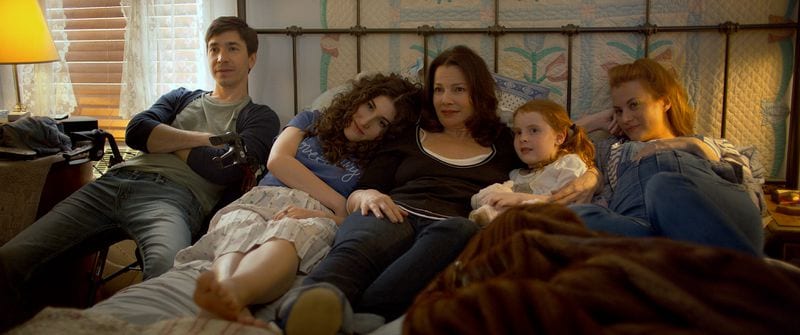
    Another affluent white people talking in New York City movie. They’re a dime a dozen, and festivals love ‘em. The rest of the world? Not so much. I’m fine with them. Most important is what’s built on top of the familiar foundation. This one has the plus of a good cast. The likable Justin Long stars and Fran Drescher is featured in a supporting role. Yes, The Nanny is in this one, in a rare dramatic turn. I’d check it out just to see her sans the over-the-top makeup, hair, and personality we’re so used to. The story has Long, an adjunct professor, experiencing a confrontation in his classroom that puts his job in jeopardy. With that stress pending, he spends time reconnecting with his family and his grandmother who is in the hospital. This one’s supposed to have quite a bit of humor to ease tension and a ton of awkwardness. Hopefully, it actually has something intelligent to say on top of the jokes.

    From the Vine

    Joe Pantoliano, character actor extraordinaire best known for his role in The Sopranos, stars in this one, the closing night film of the fest. Much like the previously mentioned movie, Pantoliano’s character faces a life crisis and goes home to reconnect with his estranged family. The twist here is that his hometown and family are in Italy. Once there, he attempts to revive his father’s vineyard and reshape the dying town’s economy in the process. It’s always nice to see Pantoliano in a starring role, and this could be a sweet, light, crowd-pleaser with some nice location work.

    Balloon

    It probably won’t mean much to anybody outside of Germany, but Balloon is directed by Michael “Bully” Herbig. In Deutschland, though, where I spent a chunk of my formative years, he’s a well-known comedian who fronted a popular Saturday Night Live-esque sketch comedy show, the Bully Parade. Back in 2001, he made his directorial debut with a lowbrow comedy western, Manitou’s Shoe, that tore up its homeland’s box office and is still the highest grossing German film of all time. It was a silly movie, but it had surprisingly good production values and a sense of style.

    I’m curious, therefore, about Balloon, his latest film, which sees the director stretching his ambitions and making a fact-based drama about two families trying to escape East Germany in the early 80s with a self-made hot air balloon. The trailers suggests a straightforward docudrama, but with the Stasi (East German secret police) closing in on the families after their failed escape attempt leaves a trail of breadcrumbs behind, this one has a fair shot at reasonable suspense. Between that, the fascinating time-period, and Herbig’s turn behind the camera, this Balloon might be worth catching.

    White Snake

    Sorry David Coverdale fans, this is not the long awaited documentary about the 80s hair metal band that gave us “Here I Go Again.” No, this one’s a CG animated film from China. It comes from Light Chaser Animation, which is being touted as “…one of China’s premiere animation studios” by the film’s website. I’ve found no proof of this. At least, they haven’t done anything we’d easily recognize. A claim to fame is an animated movie by them about cats called…well, Cats. That one looks suspiciously like The Secret Life of Pets right down to the same font style for its title. So why am I including this one here? Because it’s an animated film, I have a soft spot for animation, and mainstream film festivals don’t feature too many animated movies.

    And the animation does look reasonably glitzy, what with dragons and other fantasy elements flitting across the colorful screen. It’s a story of star crossed lovers, one a woman with amnesia who’s unaware that she’s a snake spirit, the other a snake hunter (natch); the couple embarks go on an epic journey to unravel the woman’s mysterious past. The story’s based on a popular Chinese legend, but when selling these movies to westerners, they’re always touted as based on a super popular this or that. To our Chinese readers, is any of this true? With its rights scooped up by GKIDS, the fastidious distribution company that has built quite the library of great animated movies (the American rights to Studio Ghibli’s amazing films belongs to them), this one might be a pleasant surprise.

    There’s plenty more films screening at the festival outside of the above highlights, and there’s all of those aforementioned parties (did I mention there will also be a toga party after a special screening of Animal House?). Click here to see the entire catalog.